


Dunaliella pseudosalina D-701
Chlorophyta › Chlorophyceae › Chlamydomonadales › Dunaliellaceae › Dunaliella
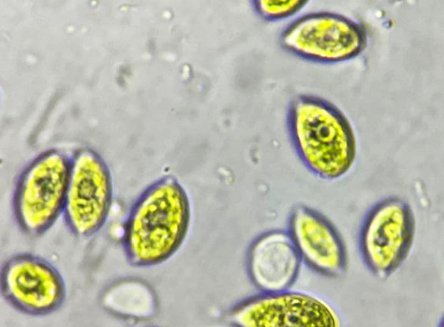
Description
History of Receipt and Isolation
- Country of origin: Mongolia
- Place of isolation: Provided by the collection of the Institute of Biotechnology, Academy of Sciences
- Last determination: Zayadan B.K., Akmukhanova N.R. in the Laboratory of Biotechnology of al-Farabi Kazakh National University, 2015
- Year of accession to the collection: 2001
- Method of obtainment: collection strain
- Genetic features: wild type
- Culture condition: axenic
Morphology and Structure
a unicellular motile organism with green or yellow-green coloration depending on cultivation conditions. The cells are oval or broadly ovoid, approximately 11–23 µm long and 6–16 µm wide. Each cell contains one large cup-shaped chloroplast with a distinct pyrenoid. Two flagella are located at the anterior end of the cell and are approximately 1.5 times the cell length.
Cultivation
- Culture medium: Artari mineral medium (liquid and agarized)
- Temperature: 26–28 °C
- Light intensity: 50–100 µmol photons/m²/s
- Light regime: 16:8 h (light/dark)
- pH: 6.5–7.0
Physiological Characteristics
heterothallic halophile, mesophile, predominantly thermophile, photophilic autotroph; rich in β-carotene.
Long-term Preservation Conditions
Stored on liquid and 1.5–2.0 % agarized Artari mineral medium. Storage temperature 10–12 °C, light intensity 10–20 µmol photons/m²/s, photoperiod 12:12 h (light/dark). Subculturing is carried out as needed, but at least once every 2–4 months.
Field of Application
In fundamental research and biotechnology.